


Kristalle&Mineralien
Pyrite Stage – Huanzala Mine, Ancash, Peru | 746g
Pyrite Stage – Huanzala Mine, Ancash, Peru | 746g
Couldn't load pickup availability
Pyrite Stage – Huanzala Mine, Ancash, Peru
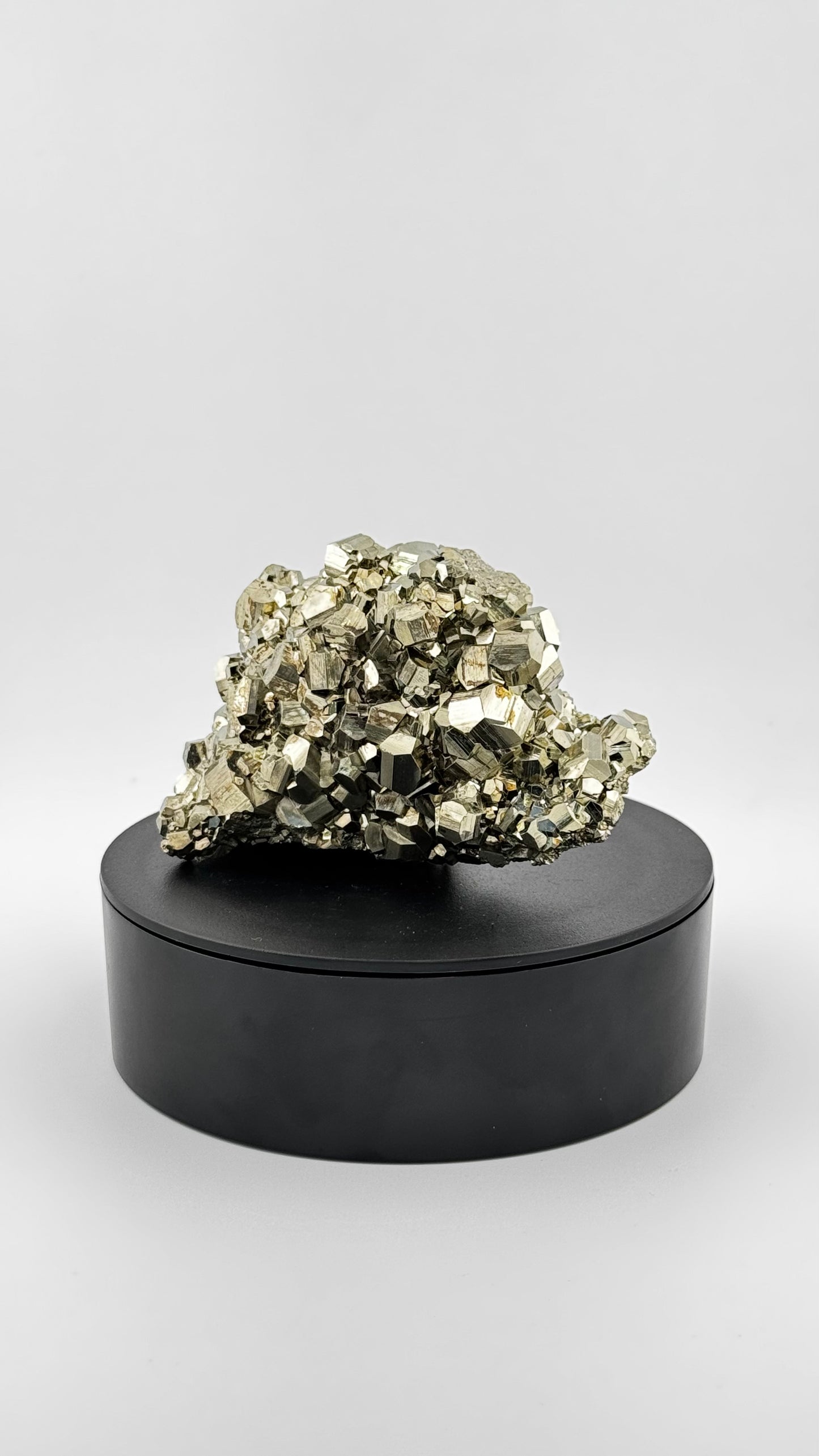
An impressive pyrite specimen from the Peruvian Andes – pure brilliance from hundreds of perfectly formed cubic crystals. Weighing 746 grams and over 11 cm wide, this is a statement piece that embodies the full power of hydrothermal mineralization.
The Gold of the Incas: Peruvian Pyrite
This specimen showcases pyrite in its most spectacular form: hundreds of cubic crystals of varying sizes form a three-dimensional mosaic of golden mirror surfaces. The intense metallic luster reflects light from all angles, creating a sparkling display that more than justifies the historical name "fool's gold".
Pyrite is the most abundant sulfide mineral in the Earth's crust, but specimens of this size and crystal quality are exceptional. The Peruvian Andes – particularly the Huanzala region – are among the few locations worldwide that yield such massive, well-crystallized pyrite aggregates.
Crystallography: Geometric Perfection
Pyrite's cubic shape is textbook perfect: ideal 90° angles, smooth crystal faces, and sharp edges. This geometric precision arises from the mineral's cubic crystal system. Many crystals also exhibit fine striations on their faces – a characteristic feature of pyrite that distinguishes it from similar-looking minerals like gold.
Visual effect:
Under direct light, the pebble reveals its full splendor: Each crystal facet acts like a tiny mirror, reflecting light in different directions. The color variations, ranging from light gold to brassy yellow, arise from minute differences in surface texture and oxidation.
The three-dimensional structure with cavities and overgrowths makes every perspective interesting – a mineral sculpture that combines both geological interest and aesthetic presence.
Historical significance
Pyrite has played an important role in human history: as "flint" it was used for striking fire, as "fool's gold" it deceived gold prospectors, and today it is a raw material for sulfuric acid production. The Inca knew pyrite as a "gold-like metal" and used polished pyrite mirrors for ceremonial purposes.
The name "pyrite" comes from the Greek "pyr" (fire), because the mineral produces sparks when struck – a property that humans have used since the Stone Age.
TECHNICAL DATA:
• Dimensions: approx. 11 × 7 × 5 cm (L × W × H)
• Weight: 746 g
• Mineral: Pyrite
• Mohs hardness: 6-6.5 (robust)
• Color: Metallic golden yellow
• Location: Huanzala Mine, Ancash, Peru
• Special feature: Perfect cubic crystal shapes, intense metallic luster
presentation
The step is supplied without a base and can be displayed freestanding. Its compact, self-supporting design makes it ideal for display cases or as a desk sculpture.
COLLECTIBLE VALUE & AUTHENTICITY:
We source our exhibits from carefully selected sources: mineral shows, private collections, and direct contacts at mineral sites worldwide. Every piece is checked for authenticity.
For collectors who value impressive size, perfect crystal forms, and intense metallic luster. A pyrite specimen of this quality is a classic in any mineral collection – timeless, spectacular, and geologically significant.
SHIPMENT:
Insured shipping in sturdy packaging. Collection in the Bergisches Land region is possible by arrangement.
If you have any questions about the origin, authenticity or other details, please feel free to contact us before purchasing.
Share
materials
materials
Please refer to the product description for the materials.
dimension
dimension
Please refer to the product description for details.
Warranty Information
Warranty Information
The statutory warranty provisions apply.



Our local crystals and quartz
We at Kristalle und Mineralien collect many minerals and quartz ourselves, sustainably and locally in the Bergisches Land region around Velbert and Wülfrath.
Subscribe to our emails
Subscribe to our mailing list for insider news, product launches and more.